
VISUAL SKILL OF THE GOALKEEPER. SOME TRAINABLE VARIABLES
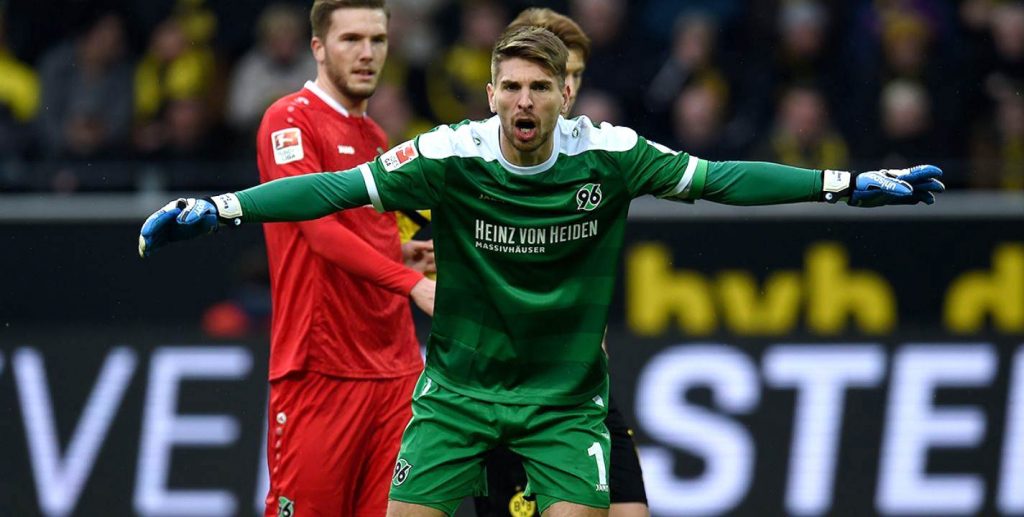
IN THE LAST TWO DECADES, THE TRAINING OF ALTHLETES’ VISUAL SKILLS HAS BECOME INCREASINGLY IMPORTANT
Athletes and coaches emphasize the importance of vision training. Certainly, most of the cues that determine the goalkeeper’s actions are visual.
The eyes carry out many of their functions through six muscles that can be stressed by demand and fatigue, which can result in deterioration of resistance and mobility. With proper training these muscles can become stronger, faster, and more resilient, and neural connections can be established between the brain and the body’s major muscle groups. Thus, vision training should complement the development of athletic motor skills.

Some areas for which vision can be trained are dynamic visual acuity, saccadic movements of the eyes, peripheral vision, stereopsis, eye-hand and foot-eye coordination, accommodation, and visual memory, among others.
Dynamic visual acuity. Dynamic visual acuity is the ability to discriminate moving objects, even while the goalkeeper is in motion, as when; for example, following the path of a ball in flight against the backdrop of the stands.
Saccadic movements. These are rapid eye movements, in which the eyeballs are quickly shifted towards an area or object of interest.. Saccadic exercises improve the resistance of the eye muscles and help athletes improve their ability to focus on one place or object, such as the ball or an opponent.
Peripheral vision. Ability to detect objects located in the visual field outside the central visual field (i.e. beyond 30 °). It is associated with peripheral awareness, which allows the goalkeeper to be aware of the location of teammates and rivals, while maintaining concentration on the ball.
Stereopsis. Refers to the perception of depth that results from the brain processing the slightly different visual information that it receives from the eyes, each of which “sees” from a slightly different angle. Good depth perception allows athletes to judge where objects are in space and accurately estimate distances.
Eye-hand and eye-foot coordination. It refers to the ability to execute precise movements based on visual information. Is a crucial skill for goalkeepers and requires continuous training.
Accommodation. It refers to the ability of the eyes to maintain focus on an object as its distance from the eyes changes
Visual memory. It involves the efficient processing of available visual information, improving the attention, concentration, and reaction skills of goalkeepers.
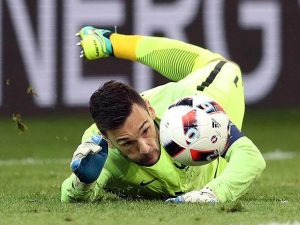
Although there are a remarkable variety of vision training programs that athletes can -take advantage of through the use of computers or other devices, we have come to understand that the best results are obtained when the training of these skills occurs in environments that best reproduce the specific demands placed on the football goalkeeper.
In future contributions we will take a closer look at some of these skills and possible ways to train them.
Published by Sergio Vizcaíno, on 25.06.2020