
THE BIOTYPE OF ELITE GOALKEEPERS IN AMERICA
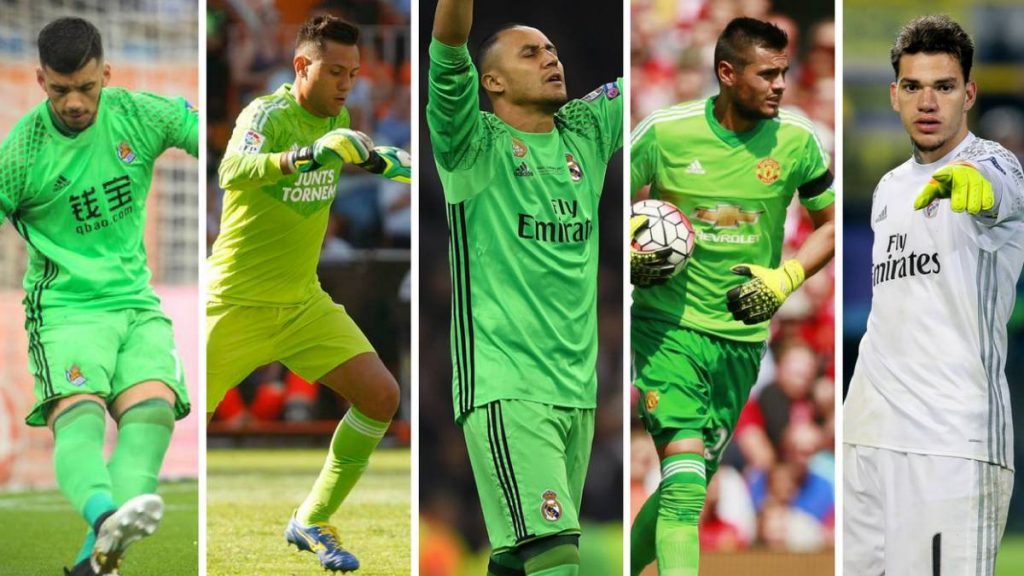
BIOTYPE IN SPORTS REFERS TO THE SET OF MORPHOLOGICAL AND PHYSIOLOGICAL CHARACTERISTICS PROPER OF A SPORT OR A SPECIFIC POSITION IN EACH DISCIPLINE, AS THE GOALKEEPER IN FOOTBALL
In recent years, a tendency to recruit higher Goalkeepers has become evident in elite football. In a previous article we reported an analysis that shows that between 2009 and 2016 the average height of the Goalkeepers of the UFEA tournaments increased from 188.5cm to 189.1cm and that the increment was considerably higher than that of players of other positions.
In an article published in 2018 we analyzed the biotype of elite Goalkeepers in America. We collected height and weight data of the Goalkeepers who played in the Copa América 2015, plus the three Goalkeepers of the United States in the Copa América Centenario 2016. We also calculated their body mass indexes (BMI = body mass [kg] / height2 [m2] )
Average height, weight and BMI of the Goalkeepers who played in the Copa América 2015 plus those of the United States of the Copa América 2016
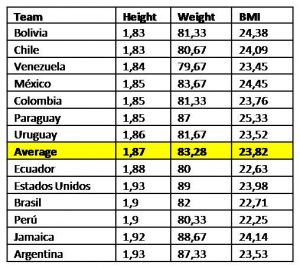
The average height was 0.7 cm below the 2014 World Cup average (187.7 cm), 1.8 cm below the average for the UEFA GKs in the interval 2009-2016 (188.8 cm) and 2.1 cm below the 2016 UEFA average (189.1 cm). Only goalkeepers from national teams above the average (Argentina, United States, Jamaica, Brazil and Ecuador) approached or exceeded UEFA averages. Some of those that recorded values below average in America are much lower, particularly Bolivia and Chile.
The average weight was 1.78 kg above the average weight recorded for the 2014 World Cup (81.5), and the BMI (23.82) somewhat higher than that of the World Cup (23.13). The average of the body mass index of the goalkeepers of the countries below the average height (all Latin American), is slightly higher than that of the countries above the average (United States and Jamaica, among others), being 24.14 for the lowest and 23.95 for the tallest.
From a historical perspective, there was a significant increase in height (4.6 cm) and a decrease in weight and body mass index (1.32 kg; 1.61) compared to data available for the Copa América 1995 (182.4 cm 84.6 kg, BMI 25.43).
References
Poli, R., L. Ravenel y R. Besson. 2017. Goalkeepers: what kind of specifics? CIES Football Observatory Reporte Mensual n°22
Rienzi, E., J.C. Mazza, J.E. Carter y T. Reilly, T, (1998). Futbolista sudamericano de élite: Morfología, análisis del juego y performance: resultados de las investigaciones en composición corporal, análisis del movimiento y análisis táctico, en la Copa América 1995 (Uruguay), Argentina: Editorial Biosystem Servicio Educativo
Vizcaíno, S.F. y L.H. Cortizo (2018). El Biotipo del Portero de Fútbol de Elite en América. RED (Revista de Entrenamiento Deportivo) 32 (1): 1-9.
Published by Sergio Vizcaíno, on 17.03.2020